
SCOLIOSIS AND CMP BRACING: A PARENT’S PERSPECTIVE
I will never forget the moment I saw the X-ray of my 14-year-old daughter’s spine. I was in shock. I had taken her to the GP who had made the referral as a precaution. I had expected to be told that everything was OK – it was just a muscular issue and could be relieved with some physiotherapy. Instead, I was told that she may have to have a very significant operation to correct quite severe scoliosis.
I am writing this to share my experience and hope that it might help other parents faced with the same shock who are at the start of their scoliosis journey.
My daughter had a double curve. Her ‘Cobb angle’ (degree of curvature) was 48 degrees in the lumbar spine and in excess of 20 degrees in the thoracic spine. We were told that this was within the range where they would ordinarily consider operating. Although I am now aware that there are many successful operations to correct scoliosis I am also a firm believer that surgery should always be the last resort – especially, I felt, where the spine is concerned given the associated risks, however small they may be.
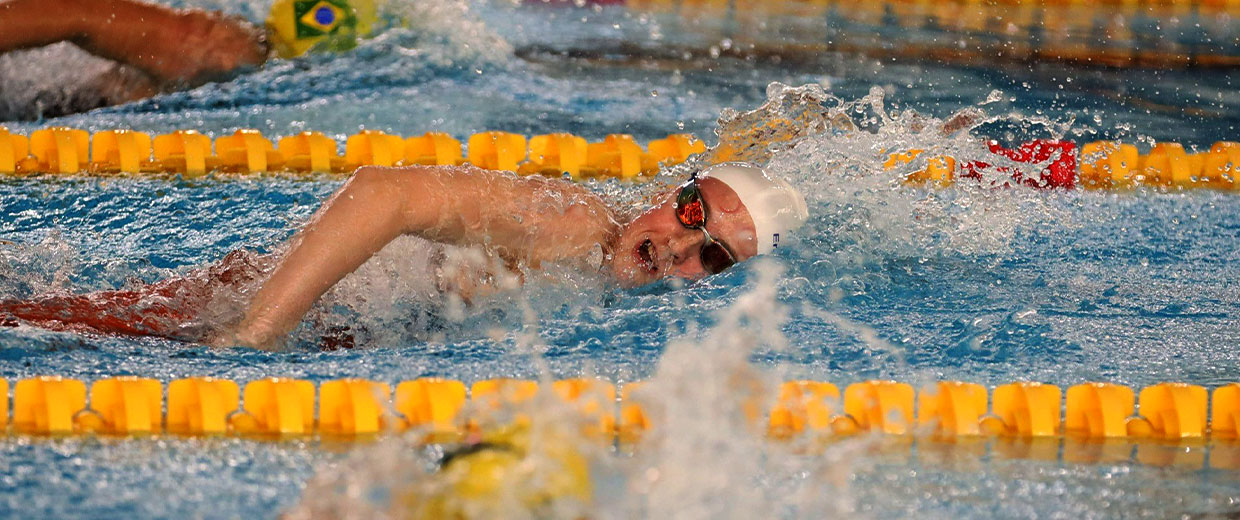
My daughter is completely devoted to swimming. She dreams of becoming an Olympic Swimmer and spends in excess of 16 hours a week in the pool and several more hours doing supplemental strength, power and stretching exercises. She competes at a very high standard and my instant thought was that all that would be lost to her because of scoliosis and if she had to have an operation that would almost certainly end any chance of her achieving her swimming goal. It felt like double heartbreak.
However, thankfully, the consultant spoke of trying bracing as an alternative to surgery. My daughter still had probably around 12-18 months of growing left and a brace could prevent her having to have surgery. This felt like a life-line and we decided that we wanted to grab it with both hands. Within a matter of weeks, my daughter was measured and fitted with her brace. The process itself was very easy and we were helped by a fantastic orthotist who explained everything to us. I can’t say that seeing your child in a brace is an easy experience, but we had spoken at length about it before and had decided that the brace would be like her best friend – it meant that she would probably not have to have surgery – no big scar or metal rods in her back, it meant that she could still swim and be active, and critically, it was only temporary, but hopefully the effects would be life-long.

However, thankfully, the consultant spoke of trying bracing as an alternative to surgery. My daughter still had probably around 12-18 months of growing left and a brace could prevent her having to have surgery. This felt like a life-line and we decided that we wanted to grab it with both hands. Within a matter of weeks, my daughter was measured and fitted with her brace. The process itself was very easy and we were helped by a fantastic orthotist who explained everything to us. I can’t say that seeing your child in a brace is an easy experience, but we had spoken at length about it before and had decided that the brace would be like her best friend – it meant that she would probably not have to have surgery – no big scar or metal rods in her back, it meant that she could still swim and be active, and critically, it was only temporary, but hopefully the effects would be life-long.
The first few days-weeks of brace wearing were not easy for my daughter. It took some time to get used to putting it on and felt uncomfortable. Thankfully she persevered with it though, because within a matter of weeks she became used to it, the discomfort subsided, and it became part of her everyday routine.
My daughter has now been wearing her brace for over 12 months and has a few months left in it. She has attended regular appointments and had the brace altered as she has grown or if a part has become uncomfortable. She wears the brace for 18-20 hours a day and when she is out of the brace she is normally swimming – I think staying active out of the brace has really helped maintain her core strength which will be really important when she is out of brace permanently.
The journey we have had with bracing has had its ups and downs – there have been the odd occasions (happily only a few) when my daughter has been upset, feeling fed up and frustrated with having to wear the brace, however for the most-part it has been something that has just become part of her day to day and she has just got on with it.
We recently had an ‘out of brace’ scan, after leaving the brace off the night before in order to see how her spine reacted when the brace was removed. My daughter’s ‘Cobb angle’ had reduced from 48 degrees to 33 degrees . We are absolutely delighted about this as it means that she is well outside of the operation zone! She still has a few months left of wearing the brace as she is still growing, but I am so very grateful that the scoliosis was detected while she was still growing and that she was given the opportunity to wear the CMP brace as an alternative to surgery.

- Don’t be afraid to ask questions of your consultant and orthotist; it helps to write a list before you go to your consultation and ask your child to do the same, so that you don’t forget what you wanted to ask.
- Talk to your child throughout the whole process – about how they are feeling/dealing with wearing the brace and how they are coping physically and mentally. Be positive and encouraging. I remind my daughter that this is such a small period of time compared to the advantage that wearing the brace will bring for the rest of her life – she only has this one window of opportunity, because when she has stopped growing, it will be too late, and this method of correction will not be available to her. It is such a gift!
- Sometimes getting the exact fit is a process. If your child is feeling particularly uncomfortable in the brace, don’t be scared to go back; the orthotist will alter the brace and do their best to ensure the brace fits well without causing discomfort – the last thing anyone wants is for your child to be in pain – everyone wants the brace to fit well and do its job.
- Encourage the 20 hours of wear a day. The number of hours in brace really make a difference.
- Night-time hours are ‘easy hours’ – always get them in!
- Be as active out of brace as possible – this will help maintain the core muscles, and of course exercise is great for mental wellbeing.
- Encourage your child to be open about their brace with their peers – the initial disclosure is difficult, but once it is out in the open it’s done with. Most children are initially inquisitive and then accepting and it helps to have friends to whom they can talk about the emotional ups and downs of wearing the brace.
- If there is a special social occasion every now and again, let your child go brace-free and wear what they want even if this means they don’t get their brace-wearing hours in that day. They can always make up a bit of extra time brace-wearing over the next week. It makes their life more bearable and means that they are more likely to stick with the brace.
- Holidays – again, subject to the advice of your specialist, be a little more flexible with the brace wearing – my daughter wore her brace around the pool with a cover-up/shorts and t-shirt, but would quickly remove it (she had become very good at putting it on and off by then) and popped it under her lounger when she wanted to go in the pool/play sport etc. She would wear her brace most evenings, but some evenings she would go brace-free and wear the figure-hugging clothes that she wanted to.
- Go shopping! We went and bought clothes that were fashionable but would hide my daughter’s brace. It’s difficult for a teenager who wants to be wearing figure hugging clothes and crop tops to be in a brace, but we compensated with cleverly chosen pieces, such as jackets, one shoulder tops, and nice skirts/shorts. And there is the promise of a shopping trip as soon as she is out of her brace to get a new wardrobe! It’s important to keep reminding your child that brace wearing is not forever, but the effects will be!
I hope that this has given a little insight into brace wearing from a parent’s perspective. I would recommend it to anyone with a child with scoliosis.
*All tips are, of course subject to the medical advice of your child’s consultant and orthotist.